For millions of students, school can feel like a cold and isolated place, bound by the rules and expectations of administrators. However, more often now than ever, students have made use of their voice; and to do more than talk to their friends. Student protests have become a force nationwide, as a series of movements ricochet across the country, with notable ones in the wake of recent events.
“I think as long as you’re peaceful I think that they’re beneficial, and it’s good to show awareness and have a connection to what’s going on in the world; and to do it here I think it shows support,” Lilly Cayce, sophomore, said.
The history of student protests dates back to 1969, when student protests were first ruled Constitutional in the Supreme Court case Tinker vs. Des Moines. Since then, there have been thousands more, with walkouts taking place over the Trump Administration, war in Iraq and African American racism. The most recent ones have been a variety of protests against Immigrations and Customs Enforcement (I.C.E) and movements have begun to grow, encouraged by the fact that they are protected.
‘Students shall not be disturbed in the exercise of their constitutionally guaranteed rights to assemble peaceably and to express ideas and opinions, privately or publicly, provided that such exercise does not infringe on the rights of others and does not interfere with the operation of the schools,’” says the Olentangy Board Policy.
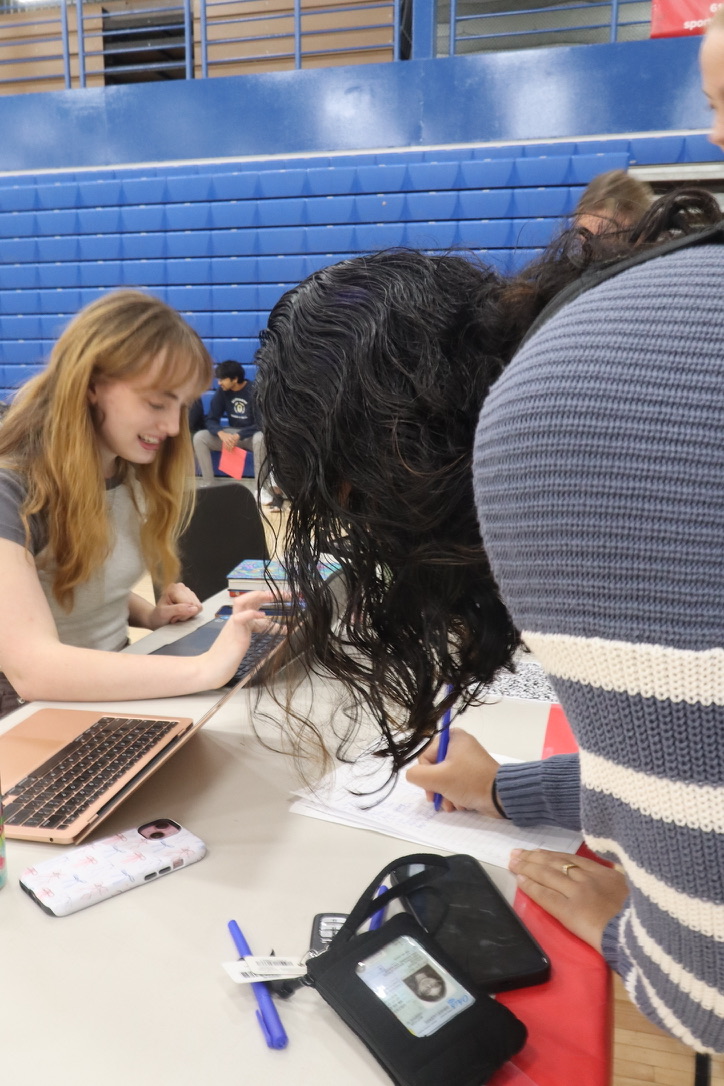
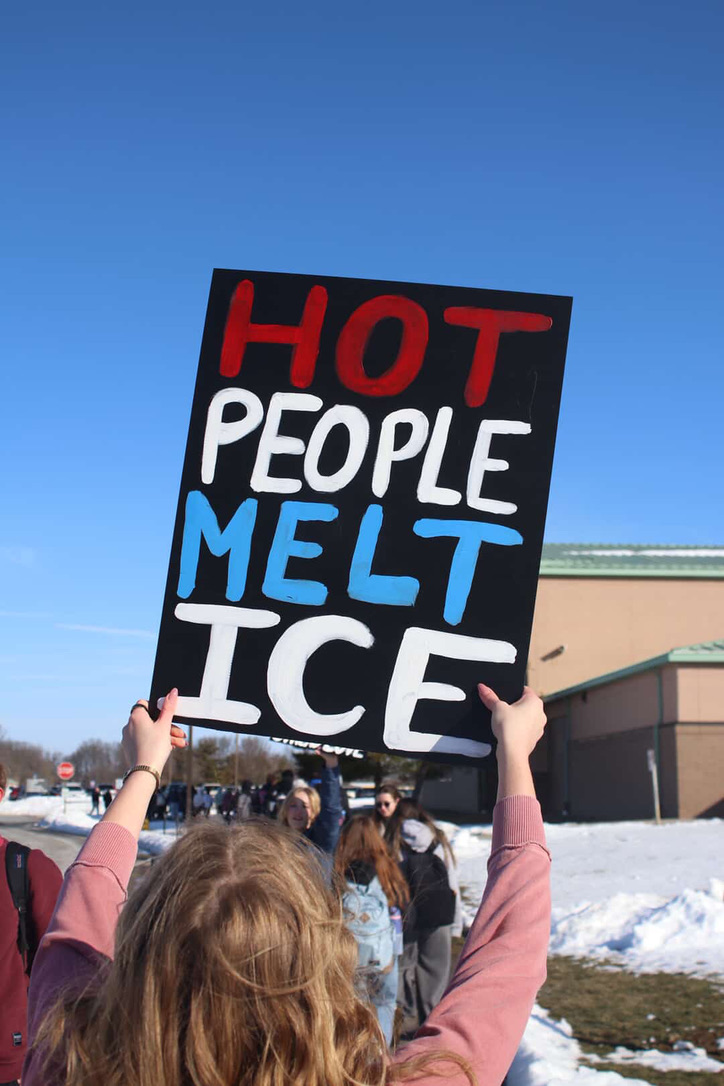
Olentangy High School and other schools across the district have planned their own protests, and Olentangy’s I.C.E walkout took place on Thursday, Feb. 12 during flex. Students were instructed to come to the senior entrance doors for a walk out to the stadium, and no one was penalized for participation. Signs had to be created without hateful rhetoric, and were also available to pick up. Overall, the protest had a large turnout, with a great deal of support.
“I think any time a group of people come together collectively to express their opinion is a powerful thing,” Tyler Shaw, history teacher, said.
While student rights may be limited in many circumstances, the right of protest is one that has stood the test of time, and isn’t expected to be taken away anytime soon. With politics changing every day, there’s sure to be more in the future; so stay tuned to the news to find out what movements are next.